Search behaviour is changing faster than most marketing strategies can keep up with. Between AI Overviews, AI Mode, and the growing dominance of YouTube, retailers who don’t adapt their approach risk becoming invisible in the channels where their customers are actually making decisions.
Here’s what’s changing, what it means for retail marketers, and five key takeaways from a recent Google event on AI-driven growth from our PPC team.
Table of Contents
- The Shift in Search Behaviour
- YouTube Is Quietly Becoming Unmissable
- The Bigger Picture: Trust, Algorithms, and Attention
- 5 Big Takeaways for Retail Marketers
The Shift in Search Behaviour
Google’s AI-powered search products are no longer experimental, they’re mainstream. AI Overviews now reaches 2.5 billion users every month, while AI Mode has already climbed to 1 billion monthly users. And the more advertisers lean into automated products like AI Max, Performance Max, and Demand Gen, the more likely their brand is to surface within these AI-driven experiences.
The impact on consumer behaviour is significant. Recent data points to a 74% increase in people’s confidence in the decisions they make through AI Mode and AI Overview, along with a 70% increase in the speed of those decisions. People aren’t just searching differently, they’re deciding faster and trusting the process more.
There’s some healthy debate about exactly how this shows up in search terms themselves. The commonly cited stat is that 40% of all searches now use five or more words (long-tail, conversational queries).
But when one team dug into 90 days of AI Max search term data across client accounts, they found the opposite pattern for actual converting traffic: 90% of terms were still short-tail, and only 0.4% of converting searches used five or more words.
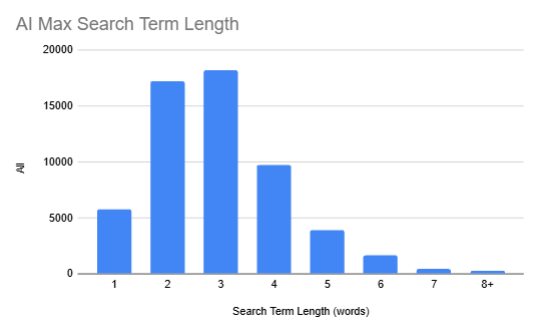
The likely explanation is that this shift is happening at the top of the funnel, in general search behaviour, but hasn’t yet fully translated into high-intent, converting queries. That may change as Ads become more integrated into AI Overview itself.

YouTube Is Quietly Becoming Unmissable
YouTube’s growth isn’t slowing down. Shorts alone now reaches over 2 billion monthly users, and 47% of those users aren’t even on TikTok, meaning YouTube is capturing an audience other platforms simply aren’t reaching. Globally, YouTube is now watched for more than a billion hours a day, with average time on site outpacing Facebook, Instagram, and TikTok.
One interesting behavioral shift: with major events like the World Cup, the most active viewing window has moved to 5am–9am, before the workday starts. Brands that haven’t considered early-morning YouTube placements may be missing a real opportunity.
There’s also a creative distinction worth noting between YouTube and Meta. On YouTube, 95% of viewers watch with sound on, the opposite of Meta, where over 80% of viewers watch on mute. That means YouTube Ads without voice-over are likely underperforming, while the scroll-friendly, silent-first creative that works on Meta won’t translate directly to YouTube.
The Bigger Picture: Trust, Algorithms, and Attention
Alongside these platform shifts, there’s a broader cultural trend worth watching: a growing “anti-algorithm” sentiment. People want more control over what they see, and trust in brands is declining, even as people spend more time online than ever (at least 30 extra minutes a day compared to pre-pandemic levels). The takeaway for brands is clear: storytelling and authenticity matter more than ever in rebuilding that trust.
It’s also worth noting that AI is used by more men than females currently when it comes to planning your creative strategy.
5 Big Takeaways for Retail Marketers
1. Feed Quality and Competitive Pricing Will Matter More Than Ever
Google’s “Universal Cart” is coming to the UK, and it could be a genuine gamechanger. It will let shoppers add products from multiple merchants into a single cart and check out entirely within the Google ecosystem, without ever visiting a retailer’s website.
If Google pulls this off as intended, your website may become a less important differentiator simply because fewer people will visit it directly. That shifts the competitive battleground squarely onto feed quality and pricing. Read more from Google

2. It’s Time to Test a YouTube Strategy
With YouTube now watched for over a billion hours a day globally, outpacing Meta and TikTok on time spent and new tools like Google’s Asset Studio making low-budget video creation far more accessible, there’s less excuse than ever not to test video ads on the platform.
3. Lean Into Voice-Over for YouTube (the Opposite of Meta)
Because 95% of YouTube viewers watch with sound on, compared to over 80% of Meta viewers watching on mute, ads built without voice-over risk falling flat. Retailers used to designing silent-first Meta creative need a different approach for YouTube.
4. It’s (Past) Time to Test AI Max for Search Ads
Traditional keyword strategy is losing effectiveness as conversational, long-tail queries become more common. AI Max addresses this with a keyword-less targeting approach, similar in spirit to Shopping ads, but instead of relying on a product feed, it uses your website URLs to match search queries to landing pages and automatically generate ads.
5. Use the “Exclude URL” Feature to Protect ROAS
AI Max’s biggest risk is also its biggest strength: automation. Without guardrails, Ads can be generated for low-intent pages like blog posts or “About Us” pages. The Exclude URL feature works like a negative keyword list for URLs, letting you keep budget focused on transactional pages likely to drive real return, rather than informational pages where purchase intent is low.
The Bottom Line
AI is reshaping how people search, decide, and shop, but the data suggests this shift is happening unevenly. Top-of-funnel behaviour is changing fast, while high-intent, converting search behaviour may be moving more slowly. The retailers who win here will be the ones who test early (YouTube, AI Max), protect their spend with the right guardrails (Exclude URLs), and get their fundamentals, feed quality, pricing, video creative, right before the competitive landscape shifts further.
If you want to scale faster with profitable performance marketing, let’s have a chat!
