

On a crisp January morning at the Everyman Cinema in Lincoln, eCommerce leaders, marketers, and strategists gathered for eComOne’s Live & Uncut event. The theme for this edition was unmistakable: AI vs Human. Across the day, speakers challenged assumptions about automation, creativity, and the future of digital commerce, asking not whether AI would replace human expertise, but how the two could work together more effectively.
The event featured live podcast recordings, panel discussions with industry leaders including Lucie Macleod from Hair Syrup, and presentations from eCommerce professionals navigating the practical realities of AI implementation. From Ethan Burnett’s exploration of untapped AI opportunities to Mel Forrest’s unveiling of Shopify’s agentic commerce protocol, each session offered actionable insights rather than speculation.
This was the context for Theo Roberts, Head of SEO at eComOne, who took the stage to address a question keeping many eCommerce professionals awake at night: how do you stay visible when search itself is being fundamentally redesigned?
Staying Visible in a Changing SEO Landscape
Presented by Theo Roberts, Head of SEO at eComOne
The foundations of SEO have shifted beneath our feet. Not gradually, but fundamentally. The playbook that worked three years ago now misses half the picture, and the changes accelerating through 2026 demand a complete rethinking of how eCommerce brands approach organic visibility.
SEO sits at the very core of search as a system, connecting every touchpoint where customers discover brands organically. For eCommerce businesses, organic search data reveals how many people actively discover your brand without being prompted. This makes SEO more than a channel. It’s rooted in data, creates opportunities for discovery, and helps uncover unmet demand and emerging needs. It identifies gaps in product offerings and categories whilst establishing full content coverage.
But the traditional SEO playbook has become insufficient.
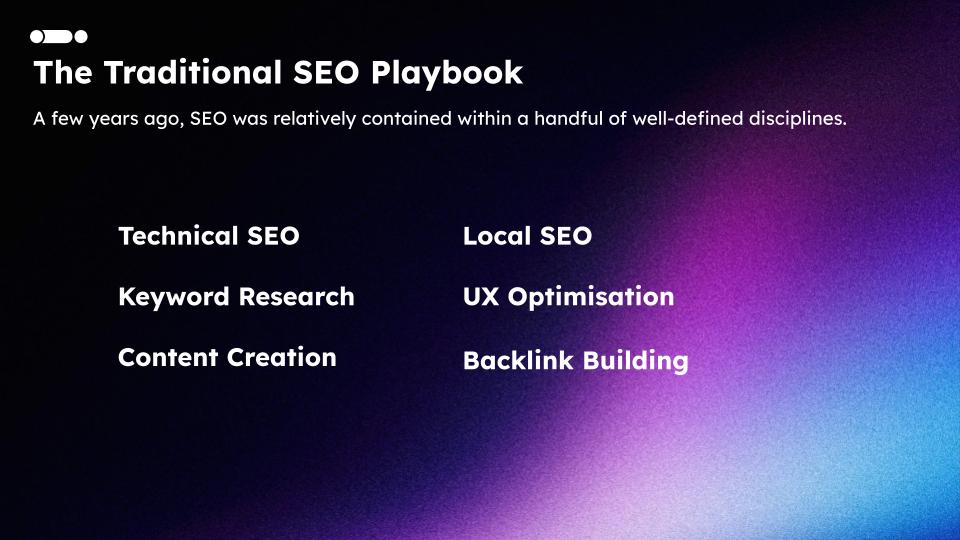
The Traditional SEO Playbook
A few years ago, SEO was relatively contained within a handful of well defined disciplines: technical SEO, keyword research, content creation, local SEO, UX optimisation, and backlink building. These disciplines worked. Brands could rank, traffic would follow, conversions would happen. The system was predictable.
Then EEAT changed everything.
Experience, Expertise, Authoritativeness and Trustworthiness
Google’s emphasis on Experience, Expertise, Authoritativeness and Trustworthiness fundamentally altered what ranking required. Digital PR and link building became critical. Building brand authority through strategic coverage, expert commentary and thought leadership became essential for demonstrating expertise.
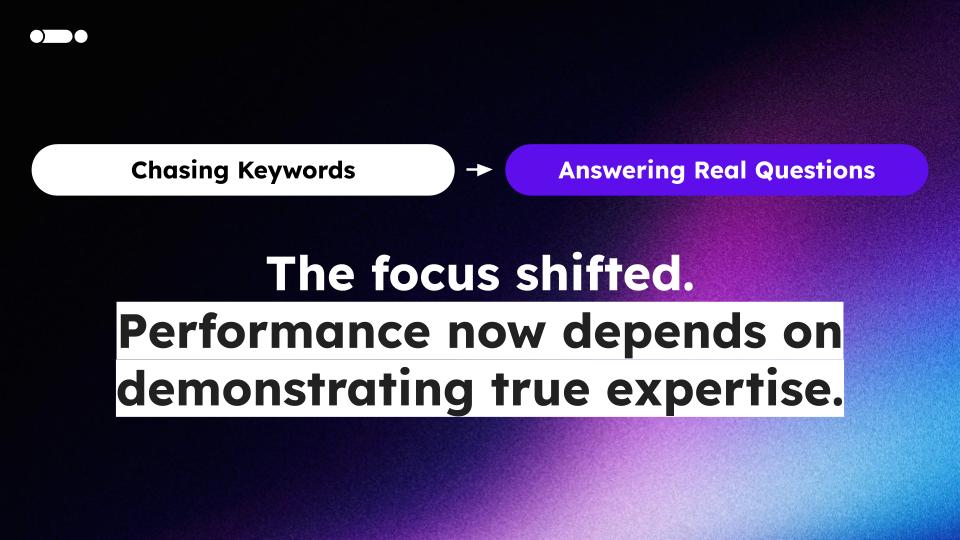
Content diversified rapidly. How to guides and tutorials. Product comparison content. Comprehensive buyer guides. Authentic customer reviews. Detailed case studies. Question focused content. The focus shifted from chasing keywords to answering real questions.
Performance now depends on demonstrating true expertise rather than simply optimising for search terms. Understanding real customer intent became paramount. User queries, search intent, and data provide true insight for understanding real customer behaviour. Semantic questions matter. Search Console became gold.
Case Study: RackZone
RackZone faced rising competition in Ireland’s shelving market with SERP ranking fluctuations and competition from giants like IKEA and B&Q. Through strategic link gap acquisition, they achieved number one ranking for “shelving” in Ireland within just three weeks. The result was increased organic visibility, improved authority, and genuine competitive advantage.
Search Expanded Beyond Traditional Search Engines
Users began discovering brands in entirely new environments, transforming how SEO needed to work. Video, audio, and the omnichannel search experience became critical.
Video content became essential across YouTube, TikTok and Instagram. All platforms users actively search on. This pushed SEO much closer to content marketing as a whole. YouTube search optimisation, enhanced blog content with author bios and read times, audio versions of written content, and short-form video across Instagram and TikTok all became necessary considerations.
The constant question: where does your target audience actually spend their time and how do they prefer to consume information?
Product Imagery and AI Powered Content
This shift raised the importance of on site product assets significantly. Strong organic performance now depends on high quality product images and lifestyle content that shows products in real world use. This remains a challenge for many smaller eCommerce brands operating with limited budgets and resources.
AI is increasingly helping brands overcome resource constraints by enabling the creation of missing lifestyle imagery and supporting assets at scale, democratising access to professional, quality visual content.
The AI Overview Era
Then AI overviews arrived, fundamentally changing search results pages. Traditional organic results now compete with AI generated summaries that synthesise information from multiple sources before users ever click a link.
This created both challenge and opportunity. Brands appearing in AI overviews gain visibility without clicks. Brands absent from these summaries become invisible regardless of their traditional ranking position.
Understanding how AI overviews select and present information became critical. The systems prioritise clear, factual content with strong authority signals. Structured data implementation became more important than ever.
Reddit and Community Search
Simultaneously, Reddit emerged as a significant search destination. Users increasingly append “reddit” to Google searches seeking authentic opinions rather than marketing content. Google’s algorithm began surfacing Reddit results prominently for product research queries.
This shift recognised what users already knew: genuine community discussions often provide more valuable information than optimised product pages. Brands that engaged authentically in relevant communities gained visibility. Those that ignored this channel lost touch with significant portions of their potential audience.
LLMs and Answer Engines
Large language models introduced answer engines, creating entirely new search behaviours. Users query ChatGPT, Claude, and other AI systems directly rather than using traditional search engines. These conversations don’t generate website traffic, but they absolutely influence purchase decisions.
LLMs synthesise information from their training data plus real time search capabilities to answer product questions, make recommendations, and provide comparisons. Brands well represented in the information these systems access appear in recommendations. Those poorly documented or difficult to understand get filtered out.
This created parallel requirements: traditional SEO for search engines plus optimisation for how AI systems discover, understand, and present brand information.
Two New Disciplines: GEO and AEO
The evolution of search created two essential new disciplines: Generative Engine Optimisation and Answer Engine Optimisation.
Generative Engine Optimisation (GEO)
GEO focuses on appearing in AI generated search results and overviews. This requires content that AI systems can easily parse, understand, and cite. Key considerations include:
Structured content. Clear headings and sections. Concise, factual statements. Content that remains summarisable.
FAQs. Direct question and answer formats that systems can extract and present.
Backlink building. Authority signals that indicate trustworthiness to AI systems evaluating source credibility.
Semantic clarity. Content that explicitly states relationships between concepts rather than relying on implied connections.
Currency. Ensuring content remains up to date, as AI systems often prioritise recent information.
Answer Engine Optimisation (AEO)
AEO addresses optimisation for systems like ChatGPT, Claude, and Perplexity that directly answer user queries. These systems pull from vast datasets but prioritise certain content characteristics:
Structured data implementation. Schema markup that explicitly defines what content represents.
Passage optimisation. Individual paragraphs that answer specific questions completely rather than requiring full page context.
Authority building. Strong topical authority demonstrated through comprehensive, interconnected content.
Accessibility. Content that remains crawlable without authentication barriers or bot blocking.

1. Optimise for passages, not pages
Rewrite key sections so each paragraph answers one specific question cleanly. AI systems extract and present individual passages rather than directing users to full pages.
2. Build your brand and topical authority
Create subcollections for main categories that are also optimised. Link supporting articles into product and category pages using consistent anchor text. Invest in digital PR and link building. Create reusable assets including industry reports. Ensure links are being built to collection pages.
3. Win the query fan-out
Create supporting detail pages and guides that answer common sub-questions. When users ask broad questions, AI systems look for content addressing related specific queries.
4. Ensure website is crawlable
Keep content open access. Don’t block bots. Add dates, sources, and clear factual statements. Cite external sources. AI systems prefer structured data including bullet point lists and tables.
5. New page types
Build glossaries with definitions and structured explanations. Enhance About Us pages with clear information about expertise, experience, and authority. These pages help AI systems understand brand context.
Top 5 Implementations for AEO
1. Establish your baseline
Ask AI systems what they know about your brand. Identify brand knowledge gaps and ensure these are addressed in your content plan. This reveals how AI currently understands and presents your business.
2. Buying guides and product comparison content are essential
Create content comparing your brand to alternatives, identifying best products for specific users, and providing comprehensive buying guides. AI systems frequently surface this content type when answering product research queries.
3. Build branded content
Ensure foundational brand pages exist: About Us, Brand History, CSR and Sustainability, Shipping and Returns, and Market pages. Build new brand content into ongoing site content strategy.
4. Social proof for credibility
Build positive reviews, case studies, customer testimonials, user generated content, and press mentions. AI systems evaluate credibility through third-party validation.
5. The AI info page
Create a plain text page that clearly states what you do, who you’re for, differentiators, integrations, compliance, and positioning. AI systems can follow this and reuse it as truth. Consider implementing LLMs.txt as a structured way to provide this information.
Key Takeaways: Navigating SEO in 2026

As the search landscape evolves with AI, focus on these critical areas to ensure sustained visibility and relevance.
Prioritise human centric content. Create content that genuinely solves problems, answers questions, and provides value for users. AI systems ultimately surface content that serves user needs effectively.
Master structured data and clarity. Implement schema markup and structure content with clear headings and logical flow so AI can discover you. Make your content easily parseable by both humans and machines.
Cultivate strong EEAT signals. Demonstrate your expertise, experience, authoritativeness, and trustworthiness. High quality content, author bios, and reputable backlinks are paramount for AI driven rankings.
Embrace omnichannel optimisation. Expand your SEO efforts beyond traditional text to include video, audio, and community platforms. Prepare for AI that synthesises information from diverse sources.
Stay agile and data driven. The AI driven search landscape is dynamic. Continuously monitor performance, adapt strategies based on data, and be prepared to iterate rapidly to maintain your edge.
SEO as Connective Tissue
At its core, SEO is still about how customers find you organically. But it now overlaps with almost everything: content strategy, digital PR, product development, customer service, brand positioning, and technical infrastructure.
In 2026, SEO functions as the connective tissue of modern search. It links your brand to discovery moments across traditional search engines, AI overviews, answer engines, social platforms, video content, audio formats, and community discussions.
The brands that thrive won’t be those that master one channel or technique. They’ll be the ones that understand search as a system, build authority across touchpoints, and create content that serves both human needs and AI understanding simultaneously.
The playbook has changed. The opportunity remains. The question is whether you’re adapting fast enough to capitalise on it.
